Free Shipping Across India
Owning a German ride is a breeze. You get road presence, an unmatchable driving feel and also bragging rights.
Until you have to order a spare part.
The process is simple: search for the part on Google and get hundreds of results, each claiming to be right fit. But is a right fit guaranteed?
Getting that perfect fit includes matching the chassis and the OE number, checking your trim/variant and carefully reading the listing.
To make it easier for you, we’ve put together a checklist for ‘how to check if a spare part fits your car’ that covers all the possible ways to check fitment. Read on to know:
Key Takeaways
-
A listing that only mentions your car’s model is not enough to confirm fitment.
-
Check the car chassis number (VIN) on the Registration Certificate (RC) and other details like engine number, fuel type, maker/model and month-year of manufacture. Match this detail with the listing.
-
If you have the old part, identify its OE, supplier or aftermarket reference and cross-check it with the VIN or chassis number.
-
Use reviews as supporting evidence, then contact the seller directly if the listing does not clearly confirm fitment.
-
Carefully go through the return policy of the supplier before ordering. It acts as your safety net in case a wrong part is delivered.
Steps to Check Car Part Compatibility Before Buying Online
Some websites suggest parts after you enter your car’s model, but model-only searches may not account for the engine, production date, trim, body style or equipment. Treat these results as a starting point and verify the application before ordering.
To reduce the risk of returns and reorders, follow these steps:
1. Start with Your Registration Certificate (RC) and Vehicle Identification Number (VIN)
VIN contains all the necessary specs of your vehicle. It encodes body style, engine and drivetrain. Not only that, but the car chassis number on the Registration Certificate also includes the model year and a unique production sequence number that clearly identifies your car.

This makes the VIN or chassis number a useful starting point for checking parts. Your RC may display it, although some digital records can mask part of the number.
What the RC Tells You
-
An Indian RC commonly shows details such as the chassis number, engine number, fuel type, manufacturer/model and registration or manufacturing information. These details can help narrow down the correct part, but the fields and format may vary by state and document type.
-
Fortunately, the car chassis number (VIN) on the Registration Certificate is easily identifiable.
-
The chassis-number field is usually labelled clearly, although some characters may be masked on digital records.
Don't Have the Physical RC Handy?
If you do not have the physical RC, check the official mParivahan or DigiLocker services for a digital vehicle record. The information displayed may be partial or masked. So, use the complete VIN from the vehicle, insurance documents or manufacturer/dealer records when a full lookup is required.
Why VIN alone isn’t enough?
A VIN is a great way to search for your part. But it isn't a complete guarantee by itself for car part fitment check as it does not track later modifications.
If the engine, transmission, suspension or other major assemblies have been replaced, the VIN may identify the vehicle’s original specification rather than the equipment currently installed.
Pair the VIN with the number on the existing part, clear photographs, measurements and the supplier’s fitment confirmation. No single check provides absolute assurance for every part.
2. Cross-check the Existing Part Number Where Possible
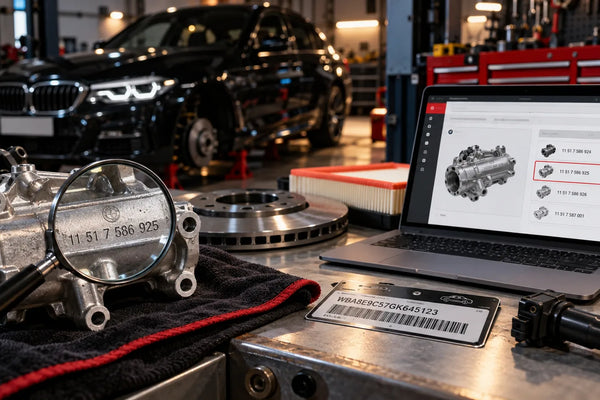
The number printed on an old part may be an OE reference, supplier number, casting number, production code or aftermarket reference. If it is an OE reference, it identifies the manufacturer’s part application rather than your individual vehicle.
It helps identify the intended part application, but you should still verify the engine, body style, production date, side, connector and equipment configuration. The manufacturer’s catalogue may also show whether the number has been superseded or replaced by a newer reference.
Most auto parts stores cross-reference this OE number in their listings to check car part compatibility before buying online.
But if you're buying something you don't have in hand (for example, a new accessory), you’ll have to do a little more work. If you do not have the old part, compare the seller’s listed measurements and specifications, such as length, bolt pattern, mounting points and connector type.
Do not buy based on photographs alone. Similar-looking parts can have different dimensions, connectors and mounting points.
3. Match the Exact Variant, Not Just the Model Name
Checking car part compatibility before buying online by searching for parts with just the model name seems easy. But it’s going to cost you even more effort in the long-term.
Hence, confirm fuel type (petrol, diesel or CNG), transmission (manual, automatic, AMT or CVT) and exact trim/variant. These can each change which part fits.

For example, the BMW X1 U11 family includes different petrol, diesel and electrified powertrain variants depending on the market. Parts such as filters, engine mounts, sensors and cooling components may differ between applications.
Moreover, even pre-facelift vs facelift car parts tend to be different. A mid-cycle update (facelift) often changes bumpers, lights and other fitment-sensitive parts. Use the manufacturing month-year on the RC to work out whether the car is pre-facelift or facelift.
4. Read the Listing Compatibility Text Carefully
A listing shouldn’t simply mention your car’s name. It should also include the OE number, VIN, generation and whether they are pre-facelift vs facelift car parts.

A universal-fit description may be reasonable for some low-risk accessories, such as certain wiper blades, bulbs or mats. It should be treated with caution for bumpers, sensors, brackets and mechanical components.
5. Use Reviews and Buyer Photos for Your Exact Model
If you are experiencing a problem with a part for your car, chances are many other owners have dealt with the same issue, too. Use that to your advantage by digging into the reviews for your car part fitment check.

But do not rely on star ratings alone. A review that names your specific model, variant or year acts as better supporting evidence than a high star rating.
6. Contact the Seller Before Ordering If You're Not Sure
Even when a listing includes several reference numbers and compatibility details, you may still need confirmation for your specific vehicle.
To clear doubts, you can check car part compatibility before buying online to contact the seller directly. Share your vehicle details or a photo of the old part with support over phone, WhatsApp or email. Ask the seller to review whether the part is compatible after you share the VIN, existing-part reference and vehicle details.
This step also becomes a differentiating factor while choosing a supplier. Prompt replies and cooperative staff indicates the supplier genuinely cares about your experience.
Your Safety Net: Check the Replacement Policy Before You Buy

Even when you’ve done everything right in the buying process, there’s a small chance you might still end up with a wrong part.
In that situation, the supplier’s car part return/replacement policy in India can become your safety net. Hence, go through the replacement policy of the supplier and take note of the return/replacement window and conditions before ordering.
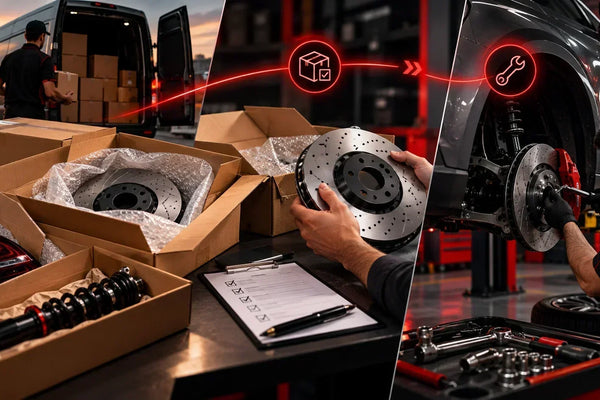
Keep the invoice, shipping label, photographs, original packaging and all included parts until fitment has been confirmed and the applicable return or warranty period has ended.
Conclusion
Do not rely on a supplier’s headline compatibility claim alone when buying car parts online. Be especially cautious when a listing promises universal fitment or unusually low prices without providing specific application details.
Carefully match your car chassis number from the Registration Certificate and other details like OE number and variant/trim of your car with the listings.
If there’s any detail missing, contact the supplier and confirm instead of assuming.
At AtoZ Auto Parts, we list all the parts with a detailed description of the car model and the related numbers. If you're still unsure about the fitment, drop us a message and our team will promptly help you out.
Frequently Asked Questions
1. Do I need my car's VIN if I have the RC Car Part Fitment Check?
The RC can provide useful vehicle details and may show the chassis number, but a complete VIN may not always be visible. For complex or fitment-sensitive parts, provide the complete VIN from the vehicle, insurance documents or manufacturer/dealer records where possible.
2. What if the seller doesn't respond before I need to order?
Favor a seller with clear compatibility information and a fair replacement policy as the fallback while buying car spare parts online in India.
3. Are exact part numbers necessary for every part?
No. Part numbers matter most to check car part fitment for fitment-sensitive parts like electricals, sensors and engine internals. For lower-risk accessories, such as some wiper blades or universal items, their dimensions and mounting details may be sufficient. Filters should still be matched to the correct engine and application.
4. Is a photo match good enough on its own?
No. Dimensions, generation and variant can differ even when a part looks visually identical. Match VIN and part number to check car part compatibility before buying online.